SOLUTION NOTE

INFOBLOX UNIVERSAL DDI™
MANAGEMENT
Unify critical network services for expanded
visibility, automation and control in hybrid,
multi-cloud environments
SUMMARY
Simplify operations and drive down errors
and outages in hybrid, multi-cloud environments.
Infoblox Universal DDI™ Management provides the industry’s most advanced, comprehensive SaaS platform for managing critical network services across hybrid, multi-cloud environments. For the first time, organizations can centrally monitor and provision DNS, DHCP and IP addresses across the digital estate from a single dashboard and API.
Overview & Challenges
Businesses are rapidly adopting hybrid and multi-cloud IT environments, with more than 9 in 10 organizations now using multiple cloud providers.1 However, as these environments expand, they become more complex to manage, monitor and scale—leading to frequent outages, costly service disruptions and ongoing barriers to digital transformation. That is especially true for foundational network services like DNS, DHCP and IP address management (IPAM) that keep every user and application connected.
Today, most IT teams juggle multiple dedicated DNS services in silos for on-premises networks, public and private clouds, external websites and more. This makes network operations far more complicated, increasing configuration errors—the leading cause of outages—which can cost businesses millions per hour of downtime.
Hybrid multi-cloud sprawl also impedes digital transformation. When every DNS provider uses its own APIs and workflows, automation stacks become fragile and likely to break at scale. This complexity makes new cloud and AI initiatives slower to implement, riskier and more expensive.
THE INFOBLOX SOLUTION
Infoblox, the industry leader in DDI, unifies the delivery and management of critical network services with Infoblox Universal DDI Management, the industry’s first and most comprehensive SaaS solution purpose-built for hybrid, multi-cloud environments.
Universal DDI Management simplifies network operations, improving the speed and reliability of business-critical network services across hybrid, multi-cloud infrastructures. It is designed from the ground up to speed delivery, enable elastic scaling and eliminate the need for complex manual configurations across multiple cloud and on-premises systems. Teams can manage critical network services in Infoblox and Microsoft environments on-premises, as well as AWS, Microsoft Azure and Google Cloud, and even SaaS-hosted external DNS services—all from a single API and the Infoblox Portal. Universal DDI Management also includes Infoblox Universal IPAM™, the industry’s only purpose-built hybrid, multi-cloud IPAM solution. It empowers NetOps teams to ensure consistent, policy-driven network and IP address allocation—reducing errors and outages—without sacrificing CloudOps speed.
With these Universal DDI Management capabilities, businesses can work with the cloud and technology partners they prefer, reducing complex manual tasks and errors while enabling faster, more efficient network and cloud operations at scale. Also, unlike alternatives, Universal DDI Management fully integrates with the comprehensive Infoblox ecosystem, including Infoblox Security and an extensive array of value-added solutions, for greater agility and control while meeting the demands of today’s expanding enterprises.
UNIVERSAL DDI MANAGEMENT
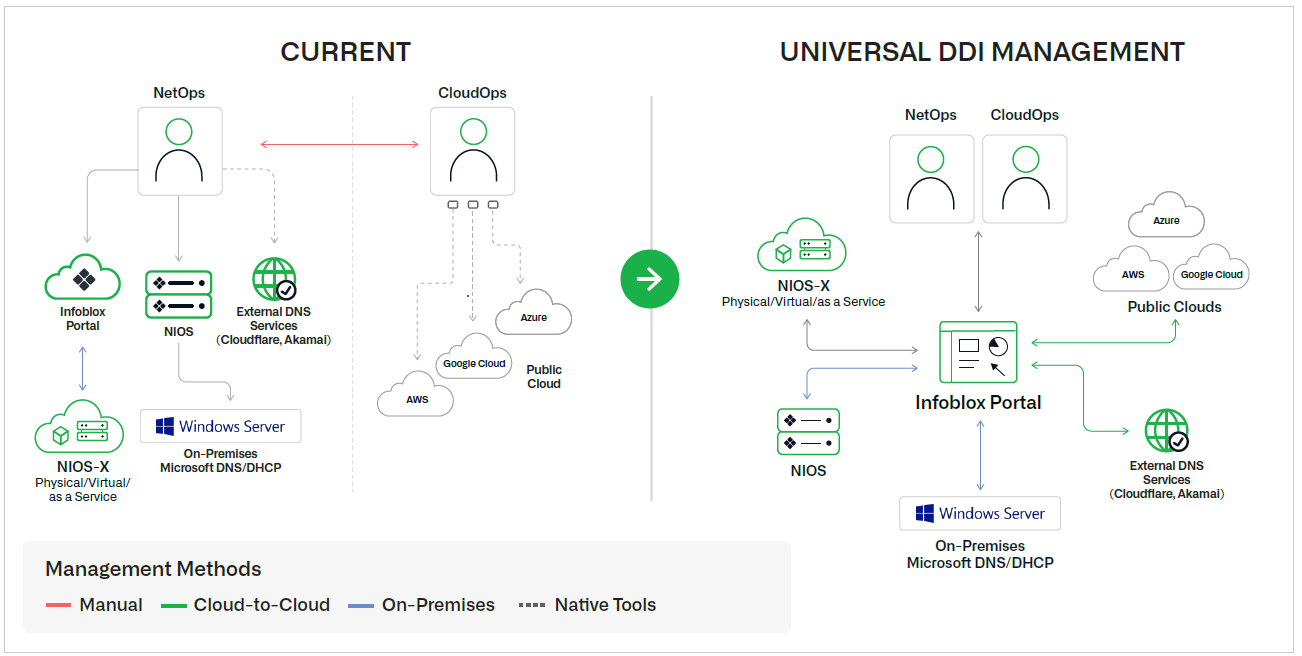
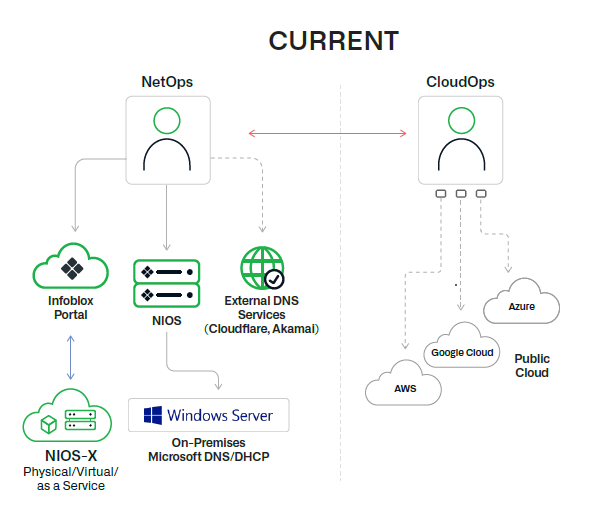

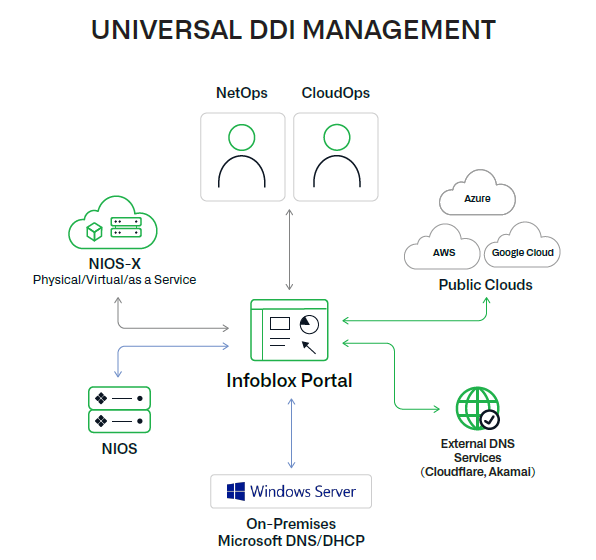

Figure 1. Overview of Universal DDI Management
USE CASE: UNIFIED DNS ZONE MANAGEMENT
Universal DDI Management unifies management of public and private DNS Zones across the digital estate. Teams can centrally manage and provision on-premises Infoblox (NIOS/NIOS-X) and Microsoft DNS, along with Amazon Route 53, Microsoft Azure DNS and Google Cloud DNS, and even external website DNS services hosted in Cloudflare and Akamai—all from a single cloud-native interface.
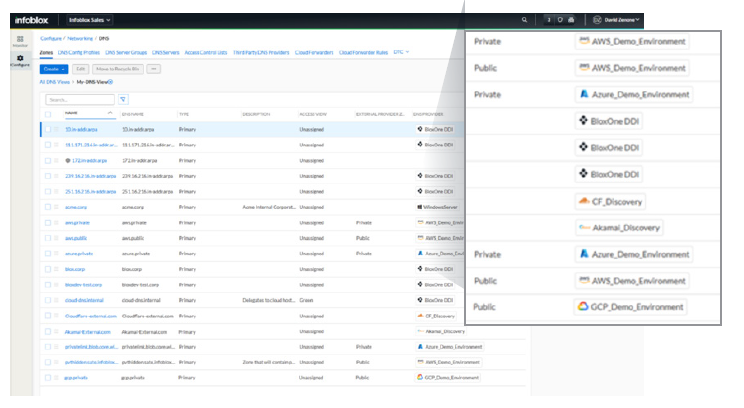
Figure 2. Management of DNS from multiple providers through single dashboard and API
USE CASE: POLICY-BASED ADDRESS MANAGEMENT
With Universal DDI Management, organizations can avoid IP conflicts and outages by applying consistent IP address policies across the hybrid, multi-cloud environment. NetOps teams can define and ensure non-overlapping address blocks and routing realms for cloud tenants and virtual private cloud (VPC) and virtual network (VNET) connectivity.
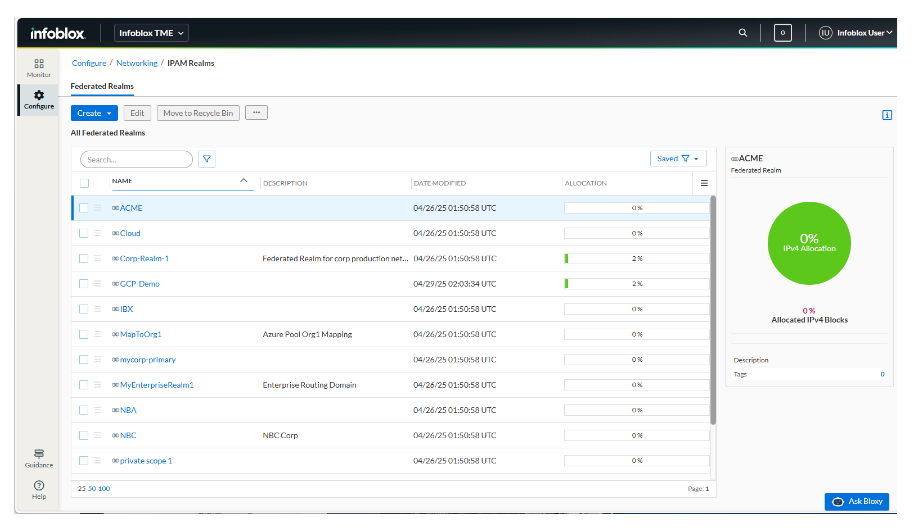
Figure 3. Policy-based address management
USE CASE: CENTRALIZED NIOS MANAGEMENT
Universal DDI Management can also simplify management of NIOS DDI services. Teams can fully manage distributed NIOS IPAM and DNS objects from the same unified cloud-native interface, replacing the need for multiple points of control for Infoblox DDI services.
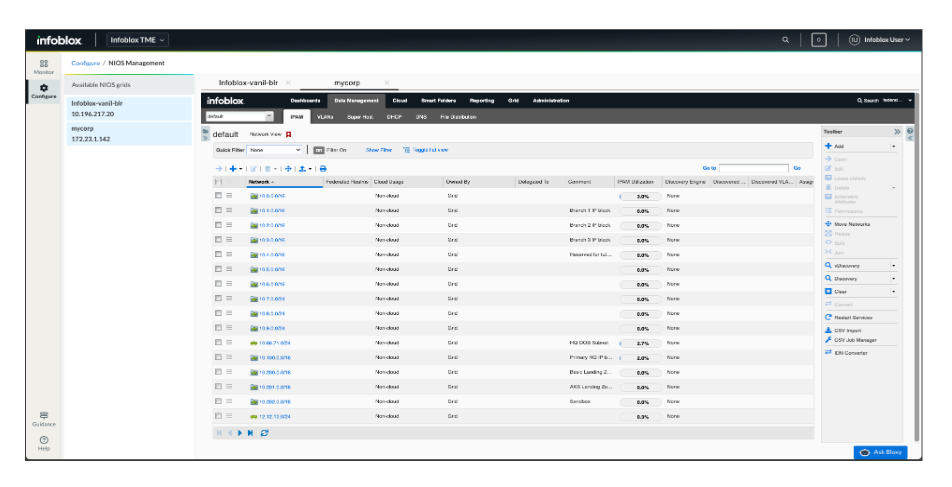
Figure 4. Unified NIOS DDI management through cloud-based Infoblox Portal
USE CASE: ADMINISTRATIVE DOMAIN MANAGEMENT
Organizations can tightly control the ability to access network objects, services and workloads across the hybrid, multi-cloud environment—including DNS zones in AWS, Azure, Google Cloud, on-premises Microsoft networks and external DNS providers like Cloudflare and Akamai. By implementing more granular “least-privilege access” to mission-critical DNS services, businesses can better align with Zero Trust security principles and evolving regulatory requirements like NIST SP-800 81, which recommends strong DNS infrastructure security.2
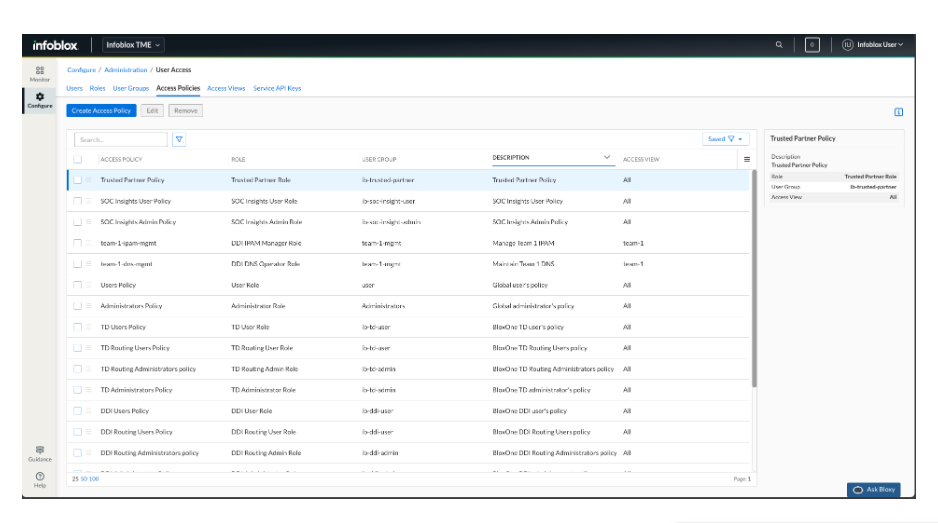
Figure 5. Secure domain management
USE CASE: UNIVERSAL IPAM IN AWS ENVIRONMENTS
Infoblox makes cross-team IPAM seamless in hybrid cloud environments through direct integration with AWS’ native IPAM tool, Amazon VPC IPAM. NetOps teams can assign IPv4 address blocks to Amazon VPC IPAM top-level pools. Meanwhile, CloudOps teams can request unique IPv4 address blocks from Infoblox directly through the AWS Management Console, AWS Command Line Interface (CLI) and AWS Software Development Kits (SDKs).
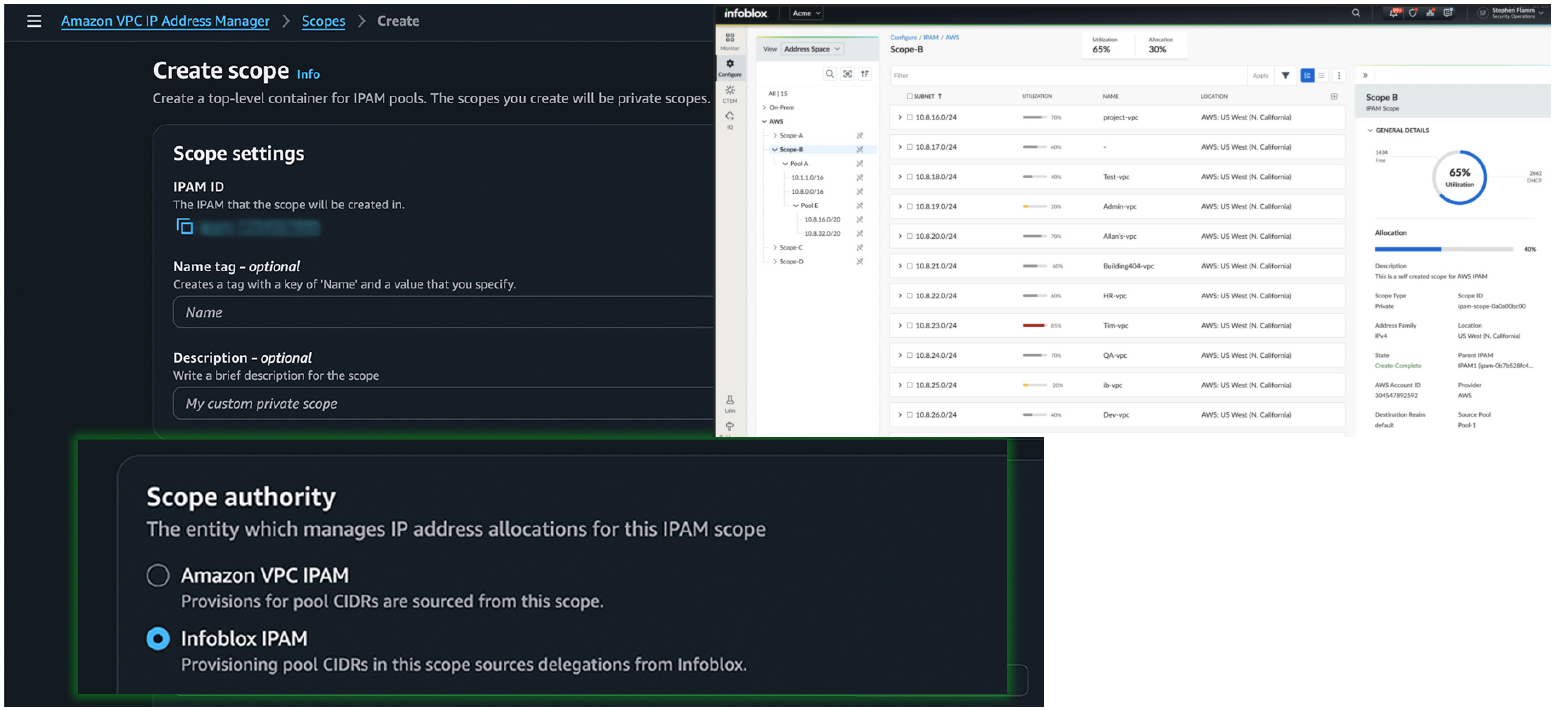
Figure 6. Infoblox integrated directly with Amazon VPC IPAM
CONCLUSION
Hybrid and multi-cloud deployments have become increasingly important among businesses seeking to modernize their infrastructures. However, this transition brings significant challenges in deploying and managing critical network services such as DDI. The lack of interoperability across different cloud providers and on-premises deployments requires teams to manually manage each environment separately via dedicated tooling, increasing operational complexity and risk. This results in slow, error-prone manual processes that can cause service outages, increase costs and delay strategic cloud and AI initiatives.
Infoblox, the leader in DDI, addresses these challenges with Universal DDI Management, the industry’s only comprehensive SaaS solution for centrally managing critical network services across hybrid, multicloud environments. With Universal DDI Management, businesses can monitor and control the critical network services that keep applications and users online—across all locations and clouds—from a single API and dashboard. As a result, they can reduce outages, automate multi-cloud operations and onboard new networks faster as the business grows—whether adding new locations, acquiring new business units or launching transformative cloud and AI initiatives.
Infoblox, the leader in DDI, addresses these challenges with Universal DDI Management, a full-featured SaaS solution providing centralized configuration and control of critical network services for hybrid, multicloud environments. Universal DDI Management streamlines operations at scale and significantly improves the speed and efficiency of service delivery across the entire hybrid, multi-cloud infrastructure. It provides the ideal solution to help organizations deliver the reliable, efficient and resilient critical network services today’s mobile, IoT and SaaS business environments demand.
- Hybrid, Multi-Cloud Management Maturity, DeMattia, Adam, Grady, John, Enterprise Strategy Group, April 2024.
https://www.infoblox.com/resources/analyst-report/hybrid-multi-cloud-management-maturity/ - NIST SP 800-81r3 Secure Domain Name System (DNS) Deployment Guide, Rose, Scott, Liu, Cricket, Gibson, Ross, National Institute of Standards and Technology (NIST), April 2025.
https://nvlpubs.nist.gov/nistpubs/SpecialPublications/NIST.SP.800-81r3.ipd.pdf