- infoblox:blogs/tags/phishing-domain-detection
The Smish is Coming from Inside the House
This report analyzes the new smishing technique and the multiple redirect layers involved in the attack.

Author: Nick Sundvall and Vadym Tymchenko
Executive summary
A new technique for bypassing mobile spam filters and distributing malicious content was recently observed in text messages received by a number of users. Where mobile phishing often includes a fake sender phone number, these malicious messages appear to come from the victims themselves. The messages include a link that, if clicked on, enables threat actors to steal victims’ information. We analyzed one campaign in depth and uncovered a large infrastructure and a complex pattern of redirection to overcome automated security filtering. Operations of this size require significant planning but allow the actors to profit even when only a small number of users fall victim to the lures.
In this report, we will step through a case study of a malicious text message, an analysis of the domain names, and an overview of the threat actor’s redirection infrastructure, including what we will refer to as the front-end domains, campaign broker domains, clickbait pages/domains, and final landing pages/domains.
Smishing Background
Smishing is the combination of the terms “phishing” and “SMS” (short message service, also known as text messages). Smishing messages are sent by bad actors to get victims to reveal private information, including passwords, identity, and financial data. The messages typically include some incentive for the recipient to click a link, which may be for a site that hosts malware or a page that attempts to convince the user to submit data through a form.
Actors have regularly used spoofed sender numbers in the text messages to evade spam filters. However, those messages that are not automatically detected by the mobile provider can be stopped by blocking the sender’s phone number. In response, threat actors continue to evolve their own techniques. In a well-known version of mobile phone spoofing, a recipient receives a text or phone call from someone who appears to be in the area close to the recipient. Users are hesitant to block local phone numbers for fear it would also block legitimate phone calls and messages.
Spoofing the recipient’s phone number is another advance by actors to overcome spam filtering and blocking, and to convince users to click on the embedded links.
Case Study
On March 29 and 30, we observed multiple smishing texts from one campaign, and we will analyze the details on one of the messages, as a case study, below. All of the messages we saw in this campaign began with the same content; the only part that changed was the URL. The text we will discuss is shown in Figure 1 below. Figure 1. Case study message; the full URL is redacted because it may uniquely identify the recipient
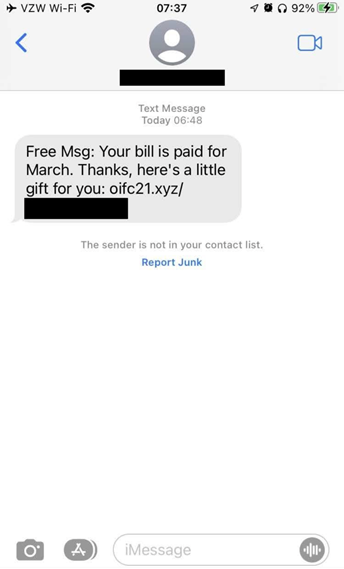
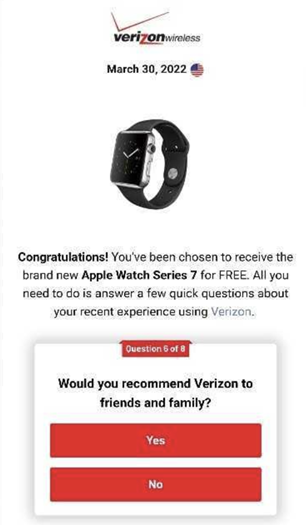
The link in Figure 1 above used the domain oifc21[.]xyz, but we saw a variety of domains used. We will call the domains in the text messages the “front-end domains”. We saw these domains use only the top-level domain (TLD) .xyz. When we clicked on the link, it did not lead us to oifc21[.]xyz; instead, multiple redirects occurred before a final landing page was presented. In this instance, we were redirected to goodasgold[.]shop, then takeoneforlove[.]com, and then eshatl[.]xyz, which presented a fake Verizon survey page. After completing the survey, a message appeared that thanked us “for being a great customer” and asked us to click the displayed button to claim a new Apple Watch.
Figure 2. Example of one of the faked survey questions Fake Verizon survey
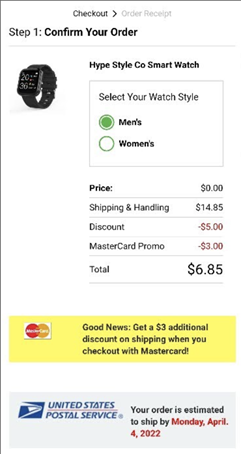
The threat actors tried to imbue their content with a sense of urgency; this is a common tactic used to pressure victims into complying with the scam. After we completed the survey, the webpage warned: “if you leave this page without claiming your reward, we have no choice but to give another loyal customer”. Clicking the button again redirected us to a new website, smartfashiondaily[.]com, where the actors asked us to pay $6.85 for “Shipping & Handling”. The actors also asked for our name, email address, phone number, mailing address, and credit card information.
Figure 3. Fake checkout page
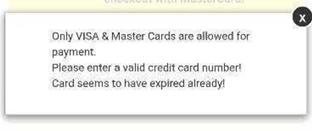
After providing the information, we were told that our credit card number was not valid. Figure 4. The message shown after we submitted shipping and credit card details
4 Campaign Study
a. Campaigns
Our analysis shows that the same actor carried out at least two campaigns in March:
- The first took place between 6 and 8 March. We call it the CDC campaign because the requests that did not pass the actor’s validations were redirected to cdc[.]gov.
- The second took place between 26 and 31 March; it appears that the campaign may have stopped after less than a week, because no activity has been observed after March 31. We call it the 1TV campaign because the requests that did not pass the actor’s validations were redirected to 1tv[.]ru or 1tv[.]com.
Both campaigns share the same set of domain names registered on 6 March.
b. Domain Names
From several examples, we have noticed that the domains used in the SMS messages have a distinct pattern: four or five alphabetical characters followed by one or two digits, all in the TLD .xyz. This allowed us to create a simple regex and apply it to data for March and the start of April.
Figure 5. Domain creation and update activity
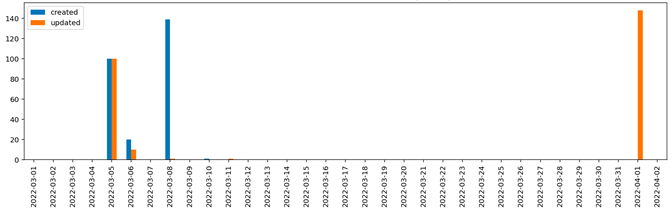
The activity histogram shows when the domains associated with this campaign were registered (“created”) and/or updated. All of the domains we believe to be associated with the campaign have the following characteristics:
- All the domains were registered between 5 and 10 March.
- Their names follow the regex pattern ^[a-z]{4,5}[0-9]{1,2}.xyz.
- The numeric components of their names use consecutive numbers.
- Their registrar is Hosting Concepts.
- They use CloudFlare for their name servers and hosting.
There were several groups of domains registered in March. Most of the domain names followed a pattern of 4 or 5 alphabetic characters followed by a sequential number within the group.
c. Observed Activity
Figure 6 below shows activity related to the domains associated with this campaign. We can see a small amount of activity from 5 to 8 March, and then a much greater spike between 26 and 31 March. This second, larger spike is associated with the smishing campaign that our case study above came from.
Figure 6. Observed activity from 1 March to 2 April
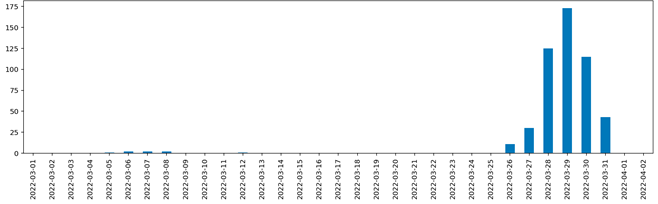
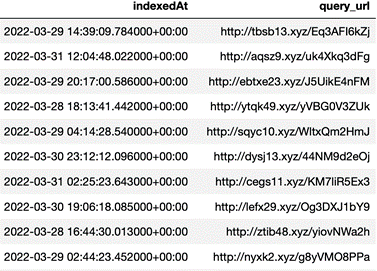
Figure 7. Sample of dates and smishing campaign URLs
Campaign Generalization
The structure and activity we observed in the two campaigns described in this paper match that of several older smishing campaigns that we have analyzed. The domains used in the redirect patterns all appear to share similar naming conventions and other properties. A deep study of both older and these more recent campaigns show that they have similar structures of redirect requests and groups of domains used for very specific purposes. The diagram below illustrates the flow of requests and redirects between domains in the infrastructure and the assumed functionality of each layer. We think this is a valid model of infrastructure that, with variations, is likely used by multiple threat actors.
Figure 8. Smishing campaigns’ redirection layers and activity
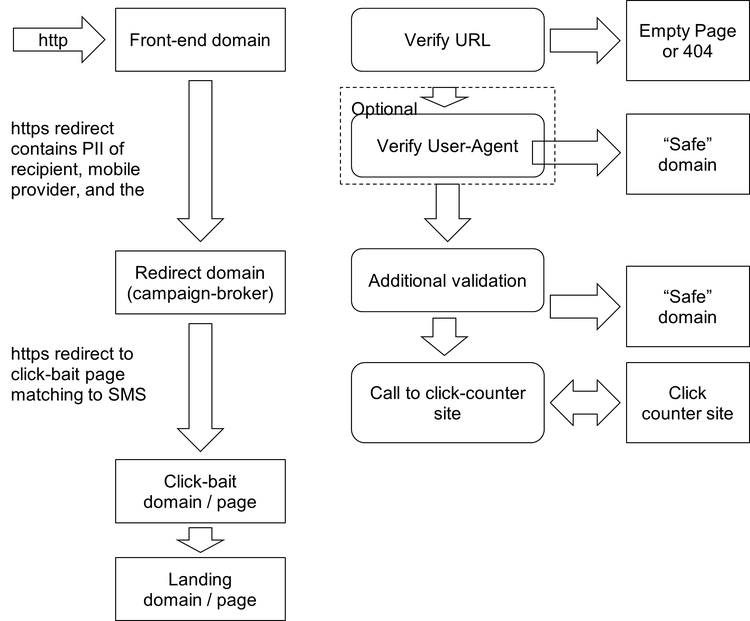
Analyzing the redirect structure showed that it consists of at least 4 layers, all with clearly identifiable purposes. Note that there are some minor differences between the 1TV and CDC campaigns, which we will identify below.
-
Front-end URL:
- The domain in the smishing URL typically has a short lifespan because it is the most exposed component of the campaign and thus the most easily identified and blocked by security providers. In most of the previous campaigns, threat actors used the domain within a few hours after registering it. In the 1TV campaign, however, the front-end domains were “aged” for about two weeks before the threat actor put them to use. This aging approach allows the actor to bypass the security provider’s attempts to block threats based on newly registered domains.
- The URL provided in the SMS provides unique identification of the user. The front-end code seems to have very limited functionality checking if the request has not expired (we observed some links expiring in under 2 days). The link will not work with any other domain associated with the campaign, probably due to redirect conditions coded in the web server’s configuration.
- In most cases, the front-end URL is accessed by HTTP protocol. This is likely due to the throw-away nature of the front-end domains. Redirects from these domains to subsequent layers are always encrypted with HTTPS.
- In some cases, we observed the front-end domain perform additional validation of incoming requests, such as user-agent string comparison. If a user-agent string does not match the targeted device, it redirects to a “safe” domain, in our case 1tv[.]ru or 1tv[.]com.
-
Redirect domain (campaign broker):
- This domain receives the HTTPS request redirected from the front-end domain. The request contains the victim identifier (in many cases the phone number), mobile provider, campaign name, and other information.
- The redirect domain verifies the user-agent header; if any mismatches are found, the domain redirects the victim to the “safe” domain.
- There may be several redirect domains in the chain.
- There is often a call to a click-tracking site, for statistics-collection purposes.
- After all the checks are successfully passed, the user is redirected to a clickbait page that matches the content of the SMS message.
- Threat actors typically keep their redirect domains active much longer than their front-end domains because users never see them. We have seen redirect domains live for over a year and serve several campaigns.
-
Clickbait domain or page:
- Our understanding of the purpose of this layer is that it introduces an interaction point that prevents automated URL-tracing tools from reaching the final phishing site. We have seen several variations of this layer; typically, it is a button that when clicked, takes a user to a “survey” site. In other cases, it is a simple single-click page that takes the user directly to the final phishing page.
- In many cases, the clickbait domain is short-lived due to its relatively high visibility.
-
Landing page (phishing site): this is the final phishing site that requests credit card information or other sensitive data.
Prevention and Mitigation
Smishing messages are a common method for sending phishing links. Infoblox recommends the following precautions for avoiding smishing attacks:
- Always be suspicious of unexpected text messages, especially those that appear to contain financial or delivery correspondences, documents, or links.
- Never click URLs in text messages from unknown sources. In the campaign under discussion, the source was the recipient, who did not send the message, and that is a red flag.
Conclusion
In this campaign, threat actors sent spam SMS messages to Verizon Wireless customers. The messages contained malicious links and appeared to have come from the recipients themselves. The links led to fake survey pages where the victims were asked to submit their personal and financial information, which ended up in the hands of the threat actors. The actors redirected victims through a series of domains to avoid analysis and detection. We have observed multiple campaigns that used this kind of technique in the past; it makes it particularly challenging for researchers to analyze the malicious URLs. Our analysis of the URL data enabled us to discover additional domains used by the actors.
Indicators of compromise
For a downloadable list of our IOCs on this topic, see the cta_indicators folder of our GitHub repository infobloxopen:threat-intelligence.
smsw1[.]xyz
mfso1[.]xyz
pely2[.]xyz
wtwx2[.]xyz
khed3[.]xyz
mgdi3[.]xyz
laea4[.]xyz
omyq4[.]xyz
qyef5[.]xyz
idvk5[.]xyz
dqvy6[.]xyz
dnmc6[.]xyz
igtf7[.]xyz
kiwv7[.]xyz
jjao8[.]xyz
kvde8[.]xyz
okil9[.]xyz
harn9[.]xyz
nill10[.]xyz
ulht10[.]xyz
nijf11[.]xyz
qgjt11[.]xyz
hcip12[.]xyz
jcal12[.]xyz
rezb13[.]xyz
tslz13[.]xyz
hlns14[.]xyz
izhm14[.]xyz
bgfv15[.]xyz
jbeq15[.]xyz
mbdq16[.]xyz
acgv16[.]xyz
nkeh17[.]xyz
wzae17[.]xyz
rtpe18[.]xyz
yhan18[.]xyz
yamn19[.]xyz
sjwf19[.]xyz
zdip20[.]xyz
culs20[.]xyz
ezks21[.]xyz
ysfz21[.]xyz
cmrc22[.]xyz
vuau22[.]xyz
jqiz23[.]xyz
hadq23[.]xyz
ixyv24[.]xyz
lhkp24[.]xyz
hpfd25[.]xyz
vjhk25[.]xyz
uyqb26[.]xyz
chkn26[.]xyz
aust27[.]xyz
ltsg27[.]xyz
lcsh28[.]xyz
aqfo28[.]xyz
erae29[.]xyz
mgjg29[.]xyz
ithn30[.]xyz
qinh30[.]xyz
mszp31[.]xyz
pomz31[.]xyz
ciww32[.]xyz
nooa32[.]xyz
mvfe33[.]xyz
zmtt33[.]xyz
jzwc34[.]xyz
ktfu34[.]xyz
opdb35[.]xyz
rrhn35[.]xyz
gptp36[.]xyz
dtus36[.]xyz
qjag37[.]xyz
swbt37[.]xyz
upah38[.]xyz
ixbc38[.]xyz
qfac39[.]xyz
xifj39[.]xyz
aped40[.]xyz
jaig40[.]xyz
ckex41[.]xyz
wgrp41[.]xyz
hegz42[.]xyz
ciuu42[.]xyz
lawn43[.]xyz
zoqw43[.]xyz
zcyj44[.]xyz
qbas44[.]xyz
usha45[.]xyz
zvlg45[.]xyz
zlxg46[.]xyz
qhrq46[.]xyz
fuir47[.]xyz
ixsf47[.]xyz
vtpf48[.]xyz
ejia48[.]xyz
pvut49[.]xyz
sgqz49[.]xyz
glju50[.]xyz
zmxu50[.]xyz
100 domains
Registrar: Hosting Concepts
NS: *.ns.cloudflare.com
Pattern: ^[a-z]{4}[0-9]{1,2}.xyz
Numeric part: Sequence of numbers from 1 through 50, each number used twice
Front-end domains from SMS
It was observed in two campaigns: a small CDC-associated campaign on 2022-03-06, and one large 1TV campaign on 2022-03-26
hggq1[.]xyz
wkcq2[.]xyz
vfar3[.]xyz
svgd4[.]xyz
fgoy5[.]xyz
gvhj6[.]xyz
bepf7[.]xyz
vkri8[.]xyz
eknz9[.]xyz
mslx10[.]xyz
dfys11[.]xyz
djzy12[.]xyz
gytr13[.]xyz
qhdd14[.]xyz
sbqs15[.]xyz
pmlx16[.]xyz
iphk17[.]xyz
opqk18[.]xyz
ntfr19[.]xyz
cvwm20[.]xyz
20 domains
Registrar: Hosting Concepts
NS: *.ns.cloudflare.com
Pattern: ^[a-z]{4}[0-9]{1,2}.xyz
Numeric part: Sequence of numbers from 1 through 20
Front-end domains from SMS
Observed in the 1TV campaign on 2022-03-26
wtmz1[.]xyz
xwjv1[.]xyz
nyxk2[.]xyz
pwnx2[.]xyz
dbmy3[.]xyz
nvso4[.]xyz
vooy4[.]xyz
hzkr5[.]xyz*
gddr6[.]xyz
hhjx7[.]xyz
shcw7[.]xyz
oxwe8[.]xyz
rpws8[.]xyz
aqsz9[.]xyz
ijph9[.]xyz
sqyc10[.]xyz
wszd10[.]xyz
cegs11[.]xyz
odkp11[.]xyz
gshu12[.]xyz
tfll12[.]xyz
dysj13[.]xyz
tbsb13[.]xyz
ccpt14[.]xyz
oyfn14[.]xyz
fgvz15[.]xyz
hquu15[.]xyz
jenh16[.]xyz
nrfe16[.]xyz
fjow17[.]xyz
flgk17[.]xyz
anwa18[.]xyz
dtxp18[.]xyz
inen19[.]xyz
ozhn19[.]xyz
avyc20[.]xyz
oifc21[.]xyz*
ukuu21[.]xyz
dcdh22[.]xyz
htur22[.]xyz
ohmv23[.]xyz
qflr24[.]xyz
xnrh24[.]xyz
snqu25[.]xyz
hklk26[.]xyz
vqsr26[.]xyz
ahct27[.]xyz
umlp27[.]xyz
kdvi28[.]xyz
xuuv28[.]xyz
lefx29[.]xyz
atsk30[.]xyz
vflu31[.]xyz
zhnv32[.]xyz
xdhh33[.]xyz
refp34[.]xyz
rczt35[.]xyz
gxkk36[.]xyz
gmec37[.]xyz
ahur38[.]xyz
asqb39[.]xyz
bjas40[.]xyz
jnmj41[.]xyz
mfis42[.]xyz
tyer43[.]xyz
spmu44[.]xyz
bxqi45[.]xyz
islf46[.]xyz
gjdl47[.]xyz
ztib48[.]xyz
ytqk49[.]xyz
cepf50[.]xyz
kcap51[.]xyz
dfeo52[.]xyz
lcrn53[.]xyz
tgav54[.]xyz
sctn56[.]xyz
cfzb57[.]xyz
lpdl60[.]xyz
bikm61[.]xyz
doif62[.]xyz
ovel63[.]xyz
bkhr64[.]xyz
vhjp65[.]xyz
guxv66[.]xyz
qgud67[.]xyz
ngkl68[.]xyz
wfug69[.]xyz
rhlw70[.]xyz
89 domains
Registrar: Hosting Concepts
NS: *.ns.cloudflare.com
Pattern: ^[a-z]{4}[0-9]{1,2}.xyz
Numeric part: Sequence of numbers from 1 through 70, with a few gaps. Some numbers from 1 through 28 were reused twice.
Front-end domains from SMS
Observed in the 1TV campaign on 2022-03-26
eaiys1[.]xyz
upxut2[.]xyz
obkom3[.]xyz
bsqnt4[.]xyz
rninf5[.]xyz
lrcoq6[.]xyz
hacpg7[.]xyz
dfooh8[.]xyz
slsvv9[.]xyz
eiwku10[.]xyz
tuafv11[.]xyz
pvtcb12[.]xyz
aekse13[.]xyz
sbbwr14[.]xyz
iiddf15[.]xyz
nqldt16[.]xyz
ceewi17[.]xyz
uzzau18[.]xyz
vnaeg19[.]xyz
bpdmk20[.]xyz
dyzhu21[.]xyz
yhqxk22[.]xyz
ebtxe23[.]xyz
lutod24[.]xyz
fxzzc25[.]xyz
rjebg26[.]xyz
ibjme27[.]xyz
svjem28[.]xyz
jbbsg29[.]xyz
qodmu30[.]xyz
yyaad31[.]xyz
plzjc32[.]xyz
velfu33[.]xyz*
kxyps34[.]xyz
cnwfz35[.]xyz
zhgsb36[.]xyz
bypmz37[.]xyz
xnqno38[.]xyz
ccpxd39[.]xyz
qsbhi40[.]xyz
qhacw41[.]xyz
iwbxe42[.]xyz
snqwr43[.]xyz
gxrgf44[.]xyz
jfbku45[.]xyz
einsj46[.]xyz*
sirdt47[.]xyz
gcfed48[.]xyz*
hnxxd49[.]xyz
jpjhz50[.]xyz
50 domains
Registrar: Hosting Concepts
NS: *.ns.cloudflare.com
Pattern: ^[a-z]{5}[0-9]{1,2}.xyz
Numeric part: Sequence of numbers from 1 through 50
Front-end domain from SMS
Observed in the 1TV campaign on 26 March
Single domain matching common pattern
Registrar: Hosting Concepts
NS: *.ns.cloudflare.com
Pattern: ^[a-z]{5}[0-9]{1,2}.xyz
Numeric pattern: only number 2
Registrar:Hosting Concepts
NS: ns1.openprovider.nl
NS: ns2.openprovider.be
NS: ns3.openprovider.eu
Registrar:Hosting Concepts
NS: ns1.openprovider.nl
NS: ns2.openprovider.be
NS: ns3.openprovider.eu
Registrar:Hosting Concepts
NS: ns1.openprovider.nl
NS: ns2.openprovider.be
NS: ns3.openprovider.eu
Registrar: NAMECHEAP INC
NS: dns1.registrar-servers.com
NS: dns2.registrar-servers.com
Registrar: Hosting Concepts
NS: pam.ns.cloudflare.com
NS: patrick.ns.cloudflare.com
Registrar: Hosting Concepts
NS: linda.ns.cloudflare.com
NS: rocky.ns.cloudflare.com
Registrar: Hosting Concepts
NS: linda.ns.cloudflare.com
NS: rocky.ns.cloudflare.com
Registrar: NAMECHEAP INC
NS: arnold.ns.cloudflare.com
NS: maeve.ns.cloudflare.com
* domains observed in malicious SMS