
Resources
This comprehensive collection of information and illustrative resources provides a full overview of Infoblox’s array of network control solutions.



Filter by:
{{ products_label }}
- {{ term.label }}
{{ solutions_label }}
- {{ term.label }}
{{ industries_label }}
- {{ term.label }}
{{ resource_types_label }}
- {{ term.label }}
Sort by:
{{ sort_label }}
- Date
- Title
Infoblox Threat Defense™ Agentless for Roaming Users
Infoblox Threat Defense™ offers an agentless solution that enables native and embedded DoH resolvers, including Microsoft’s Zero Trust DNS (ZTDNS), to enforce security without installing the Infoblox Endpoint agent or…Deployment Guide
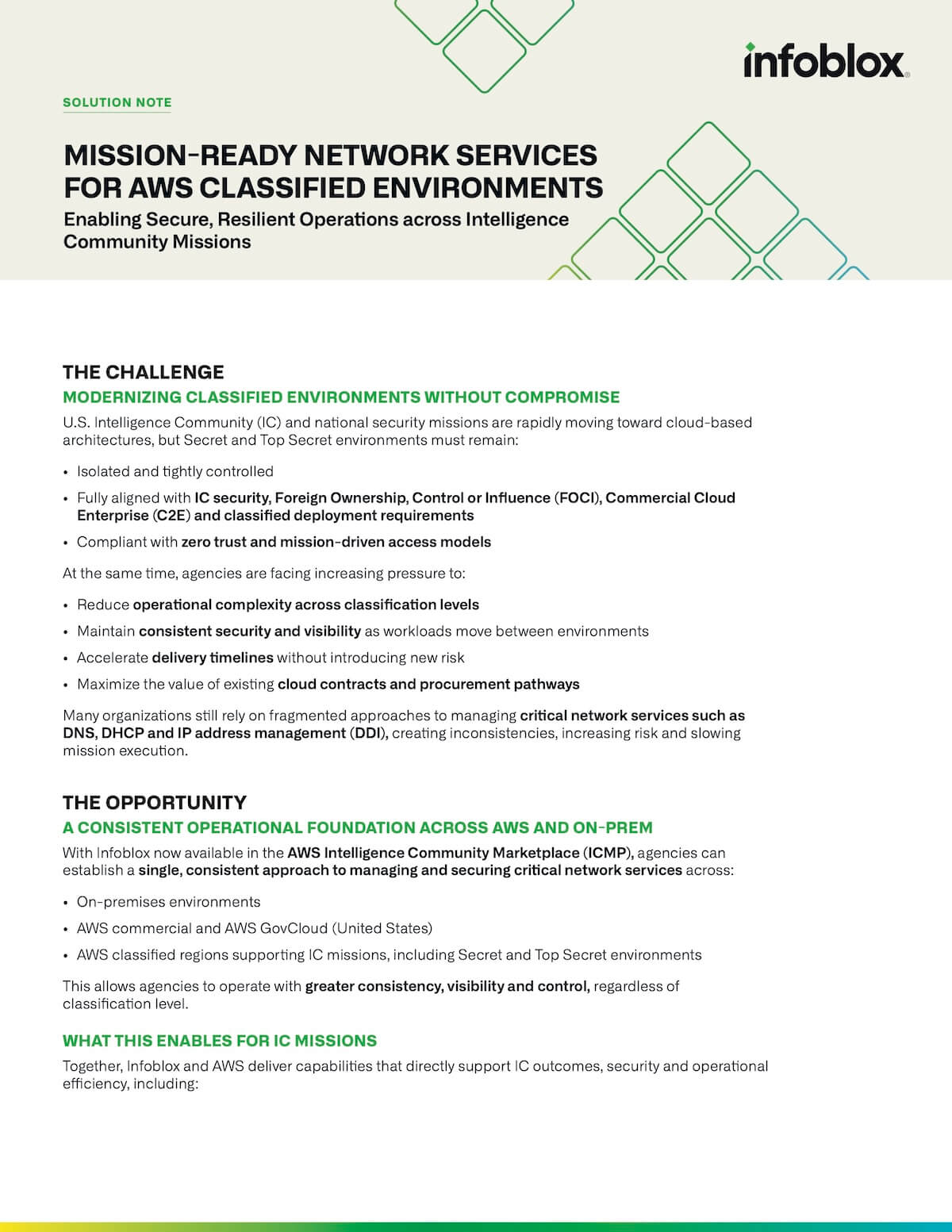
Mission-Ready Network Services For AWS Classified Environments
Enabling Secure, Resilient Operations across Intelligence Community MissionsSolution Note

A Better Way to Modernize Your Network (without the Headaches)
See how organizations modernize networks step by step, reducing manual work, improving visibility, and building momentum without disruptive overhauls.Webinar

2025 DNS Threat Landscape Report Video
DNS Threat Landscape Report: Discover key trends and techniques used by DNS threat actors with firsthand observations from Infoblox Threat Intel.Videos
Meeting Zero Trust And Comply To Connect Requirements With Infoblox
Zero Trust Architecture (ZTA) and Comply to Connect (C2C) are now mandated priorities for U.S. federal and Department of War (DoW) networks, rather than optional hardening initiatives.Whitepaper
Mission-Ready Network Services For Azure Air-Gapped Cloud
A Consistent Foundation for Secure, Resilient Federal Operations across Classification LevelsSolution Note
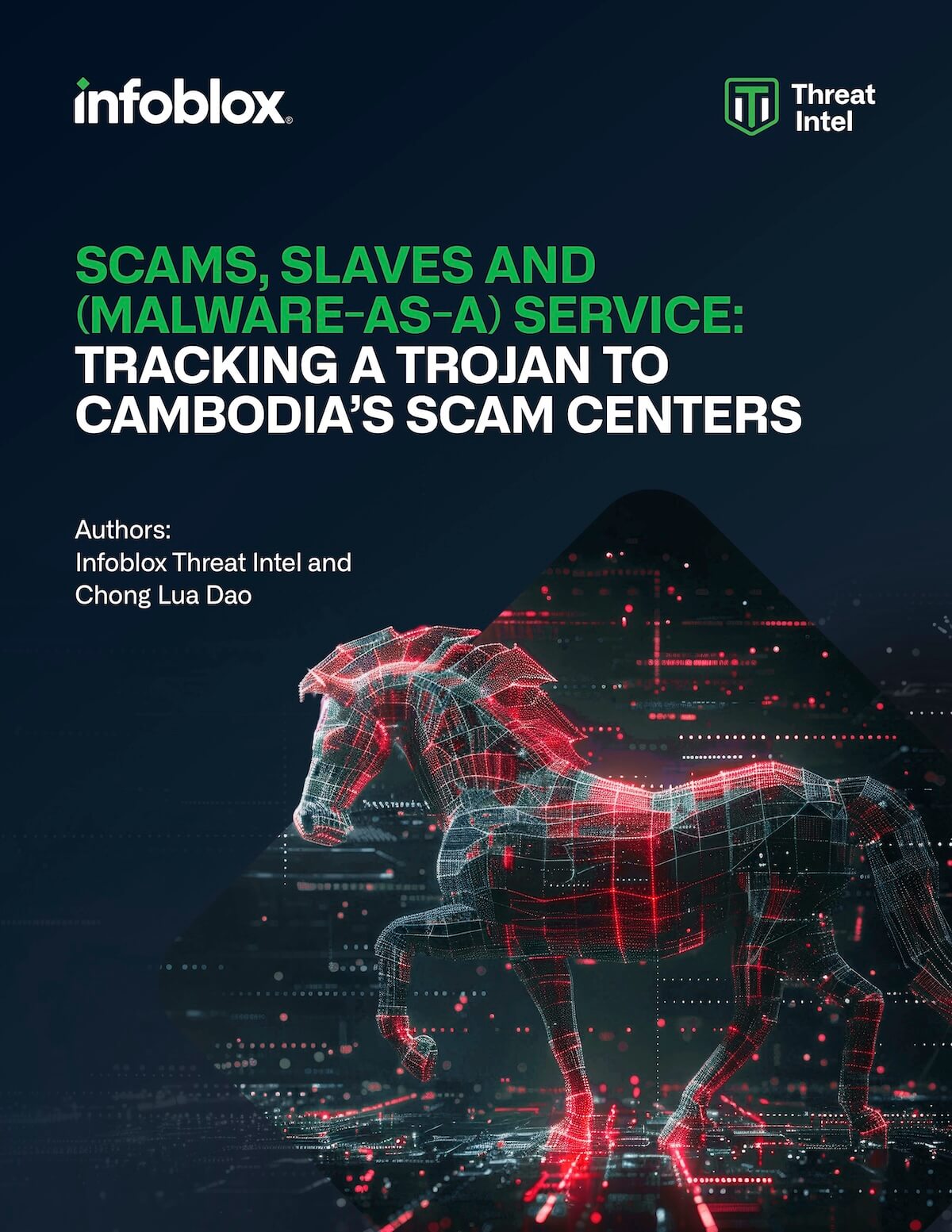
Scams, Slaves And (Malware-as-a) Service: Tracking A Trojan To Cambodia’s Scam Centers
DNS links an Android banking trojan to Cambodian scam centers, exposing a global Malware-as-a-Service network used for fraud, data theft and device takeover.Research Report
Pinpoint and Prevent Configuration Errors in Complex Hybrid and Multi-Cloud Networks
Prevent downtime by modernizing how you manage legacy Microsoft DNS/DHCP—without a rip-and-replace overhaulUse Case Spotlight

Simplify and Secure Hybrid Cloud with Infoblox and Google Cloud
Learn how Infoblox and Google Cloud help teams simplify and secure hybrid cloud environments with trusted DNS, networking and security capabilities. This video supports the related Google Cloud asset bundle…Videos

Are You Ready for NIST’s New DNS Security Guide? What SP 800-81 Means for Your DNS
In this Infoblox webinar, experts will unpack the key changes in SP 800-81r3 and translate them into actionable steps you can take to harden your DNS, reduce risk, and operationalize…Webinar
Close the CMDB Reality Gap with Infoblox and ServiceNow
Your configuration management database (CMDB) is lying to you about what is actually on your network, and attackers live in the gaps. Until this “CMDB reality gap” is addressed, every…Solution Note
Infoblox Experiences Zero Ransomware with Infoblox Threat Defense™ and SOC Insights
As the undisputed leader in the DDI (DNS, DHCP and IP address management) market, we have been helping companies improve the agility, automation and scalability of their network infrastructure for…Case Study